
Tell me what you are trying to build, fix, govern, prove, or launch, and I will point you to the public Folium page that fits. It uses public routes only, so do not send private data here.
Folium framework
Forward engineering is the bridge from AI idea to operated system.
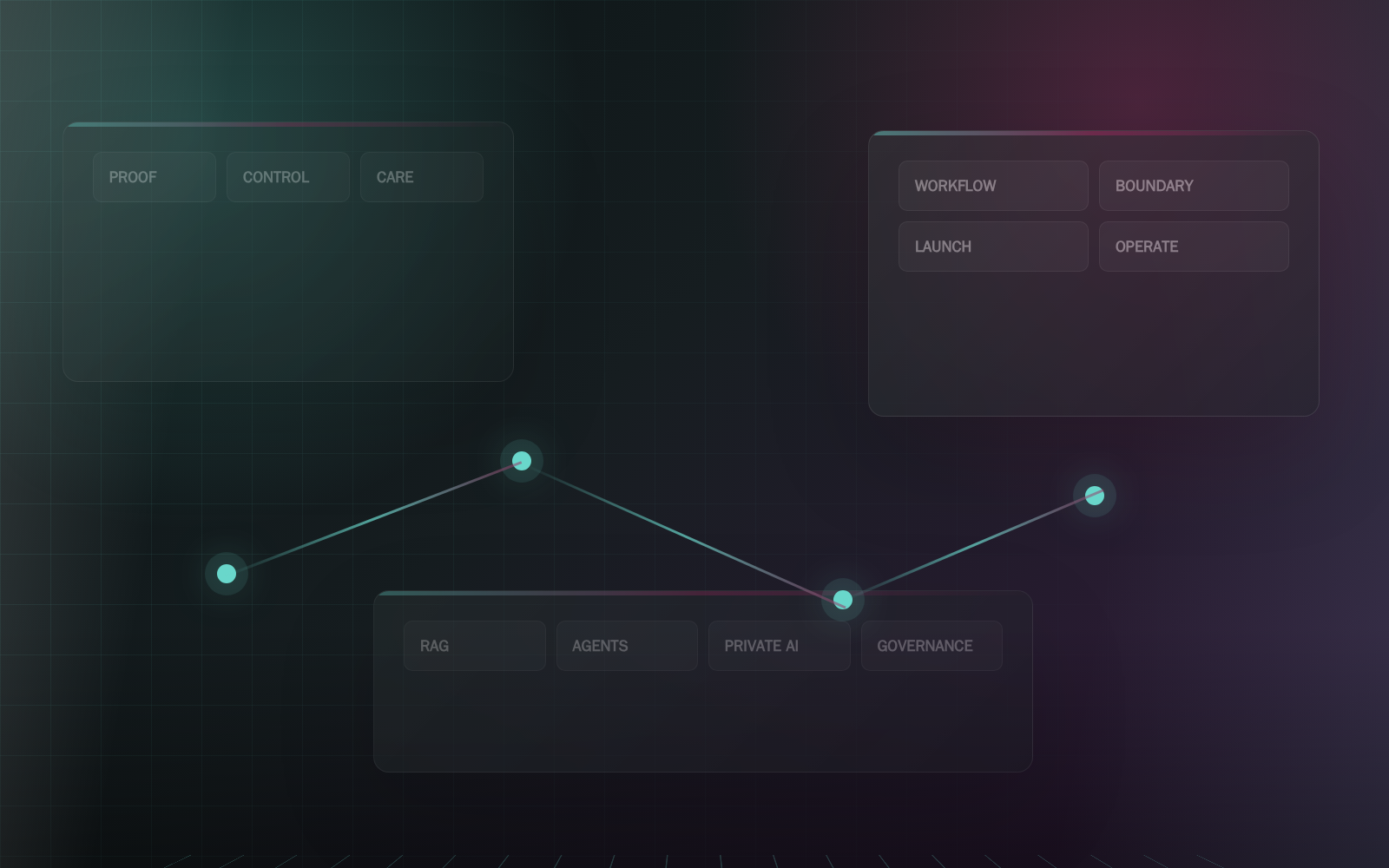
This map makes Folium's delivery method visible: diagnose the real pressure, design the system, build the working surface, govern behavior, launch with records, and operate the improvement.
Why it matters
This framework gives the buyer a language for the decision.
Consulting without build leaves the customer with decisions but no machinery. Build without governance leaves risk. Forward engineering combines both.
How to use it
01
Diagnose and scope
Name pressure, data, people, constraints, first workflow, and decision owner.
02
Design and build
Assemble software, AI route, data source, integration, review surface, and record path.
03
Evaluate and operate
Test behavior, govern authority, launch only when ready, and support the operating rhythm.
Operating rubric
What weak and strong states look like.
Discovery
Weak state AI idea is broad.
Target state The first workflow is named and testable.
Design
Weak state The tool is chosen before the route.
Target state System design covers data, runtime, review, and owners.
Launch
Weak state Demo becomes dependency.
Target state Promotion follows evals, gates, support, and rollback.
Operate
Weak state Project ends at handoff.
Target state Monitoring, incidents, release notes, and improvement rhythm continue.
Decision matrix
Turn signals into action and ownership.
Signal
Action
Owner
Workflow still vague
Stay in diagnose
Business owner
Data boundary unclear
Run boundary review
Technical or data owner
Evals and support ready
Move to launch room
Launch owner
Useful outputs
What the framework should leave behind.
Forward engineering map
Technical scope
System design
Evaluation plan
Launch and operating handoff
Related paths
Move from framework to Folium delivery.
FAQ
How buyers should read the framework.
How is forward engineering different from consulting?
Consulting can explain direction. Forward engineering enters the workflow and builds the working system, records, governance, and operating handoff.
Does forward engineering require one vendor?
No. Folium is model-agnostic and tool-agnostic. The route follows the workflow.
Start here
Use the framework, then build the first controlled lane.
Folium can translate the score, matrix, or map into workflow scope, system design, data boundary, launch gate, and operating handoff.
- 01 Scope
- 02 Build
- 03 Prove
- 04 Operate
Common questions
Questions this page answers.
How is forward engineering different from consulting?
Consulting can explain direction. Forward engineering enters the workflow and builds the working system, records, governance, and operating handoff.
Does forward engineering require one vendor?
No. Folium is model-agnostic and tool-agnostic. The route follows the workflow.