
Tell me what you are trying to build, fix, govern, prove, or launch, and I will point you to the public Folium page that fits. It uses public routes only, so do not send private data here.
AI orchestration control plane
Coordinate source truth, agents, models, runtime, and governance.
The next AI failure mode is not lack of tools. It is too many disconnected tools, agents, models, dashboards, documents, automations, runtime lanes, and provider accounts moving without one business-owned control plane. Folium Systems helps turn that sprawl into an AI orchestration control plane: route the work, connect the knowledge, manage agent operations, govern authority, observe health, and keep humans in command.
Operating comparison
Compare the narrow tool path with the Folium operating path.
This route can include models, retrieval, automation, or software, but the buyer outcome is broader: a controlled operating capability with human review, records, launch gates, and ownership.
| Operating question | Narrow tool path | Folium Systems path |
|---|---|---|
| What is being built? | A standalone tool, prompt, chatbot, connector, or single AI feature. | Coordinate source truth, agents, models, runtime, and governance. as one service lane connected to workflow software, trusted knowledge, agents, APIs, governance, proof, and operating handoff. |
| How is control preserved? | Control is often added later through settings, policy notes, or manual cleanup. | Control is designed into source registers, permission maps, human gates, logs, blocked actions, recovery paths, and launch rooms. |
| How does the business know it is ready? | Readiness may depend on a demo, vendor promise, or isolated answer-quality check. | Readiness is proven through reviewable surfaces, scorecards, browser checks, known limits, support ownership, rollback triggers, and evidence records. |
Business-owned AI control plane
AI becomes useful when source truth, agents, tools, and governance move together.
Folium designs the operating layer that lets a business coordinate many AI parts without surrendering source truth, human judgment, data custody, or launch authority.
The control plane names source truth, process memory, owners, rules, and the decisions that stay human.
Agent operations receive scoped jobs, permission lanes, route contracts, health signals, and escalation paths.
Governance is built into the control plane so policies can approve, block, rollback, and record action.
Orchestration, control, and governance
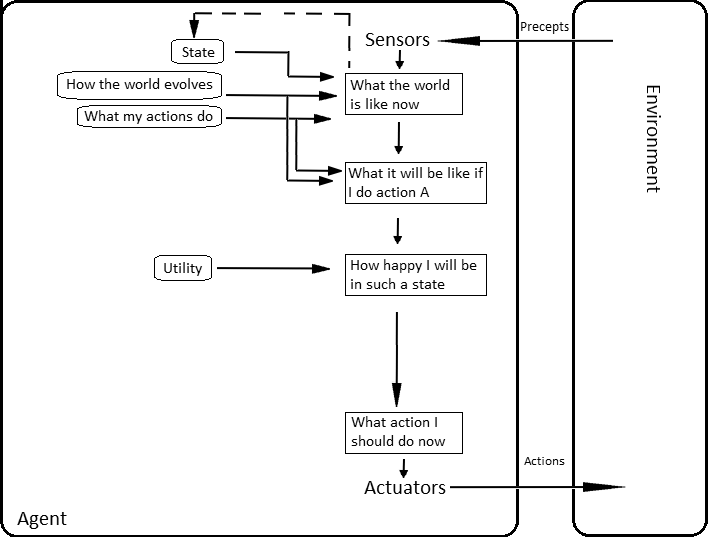
Folium turns scattered AI into one governed operating layer.
Folium designs the coordination layer where models, agents, memory, tools, runtime lanes, people, and policies work together without losing business control.
Folium Systems AI control plane route, govern, observe, improve
Business control layer
Source truth, policy, process memory, owner decisions, customer rules, and operating context are organized before agents act.
Governed knowledge network
Documents, databases, workflows, signals, and feedback loops become connected retrieval and memory lanes with rules.
Agent fleet
Specialized agents receive scoped jobs, approved tools, model routes, action limits, logs, and escalation paths.
Runtime estate
Cloud APIs, local models, private endpoints, containers, virtualized runtime lanes, GPU hosts, and edge lanes are placed by risk and cost.
Governance controls
Policies become live controls: approval gates, blocked actions, rollback triggers, audit records, and support ownership.
Fleet inventoryRoute contractsMemory mapPolicy gatesLaunch roomOperations cockpit
What Folium Builds
Clear systems, reviewable records, and a path your team can operate.
Control plane and governed knowledge network
Folium helps a company define the operating context: source truth, policy, process memory, roles, customer rules, retrieval paths, and update cadence. This gives agents and models a controlled knowledge network instead of loose context.
- Control-plane and source-of-truth map
- Governed knowledge network design
- RAG, graph, document, relational, cache, and memory lane planning
- Source freshness, ownership, retention, and correction rules
- Decision-rights map for human, agent, model, and system action
Mass agent management and fleet support
A serious AI estate may need many agents: support, document, commerce, operations, finance-adjacent, engineering, QA, monitoring, and executive review. Folium designs the fleet so each agent has a job, authority lane, review path, and lifecycle record.
- Agent fleet inventory and role taxonomy
- Agent mesh control plane design
- Route contracts, permission scopes, and tool access maps
- Multi-agent review, consensus, challenge, and escalation patterns
- Agent promotion, parking, retirement, rollback, and incident ledger
Runtime estate from isolated lanes to cloud
Folium's own build posture uses separated lanes, browser test zones, local/runtime boundaries, and public deployment gates. The public offer is the pattern: place capability where it belongs and keep the route inspectable.
- Cloud API, private endpoint, local model, and hybrid route design
- Ollama, llama.cpp, vLLM, SGLang, model-server, and tool-server planning
- Container, virtualized runtime, GPU host, and edge placement review
- Service boundary contracts for each runtime lane
- Cost, latency, privacy, fallback, and vendor-exit matrix
Governance brain and operating cockpit
Governance should not live only in policy documents. Folium helps build the live control layer: what may happen automatically, what needs review, what is blocked, what gets logged, and what triggers rollback.
- Binding governance layer and approval-gate map
- Allowed, review, blocked, and escalated action taxonomy
- Fleet health, spend, drift, incident, and source-freshness cockpit
- Human review points, launch rooms, and operating handoff records
- Rollback triggers, degraded-mode behavior, and recovery procedure
Control plane workflow
The AI control plane turns scattered capability into coordinated operations.
Folium maps source truth, model routes, memory lanes, agent jobs, runtime estate, governance gates, and operating cockpit before giving AI more authority.
- 01 Control map Define source truth, policy, process memory, customer rules, owners, and decision rights.
- 02 Governed knowledge network Connect documents, databases, signals, workflows, retrieval, graph, cache, and feedback loops with access rules.
- 03 Fleet design Assign agent jobs, tools, model routes, permissions, logs, human review, and failure behavior.
- 04 Runtime estate Place cloud APIs, local models, private endpoints, containers, virtualized runtimes, GPU hosts, and edge lanes by risk.
- 05 Govern and operate Use approval gates, blocked actions, rollback triggers, health checks, cost review, incidents, and release notes.
Review Point
A buyer can see source truth, memory lanes, model routes, and agent jobs before authority expands.
Folium packages this as visible review material so owners, staff, and reviewers can decide whether to refine, launch, pause, or expand.
Review Point
Agent operations can be managed with owners, permissions, logs, health checks, rollback, and retirement paths.
Folium packages this as visible review material so owners, staff, and reviewers can decide whether to refine, launch, pause, or expand.
Review Point
Cloud, local, virtualized, and hybrid AI lanes become an operating estate instead of disconnected experiments.
Folium packages this as visible review material so owners, staff, and reviewers can decide whether to refine, launch, pause, or expand.
Start here
Bring the next AI step under control.
You do not need to know every model name, runtime option, or integration path. Tell us what is slow, risky, expensive, confusing, or disconnected. We will help translate it into a practical AI systems plan.
- 01 Scope
- 02 Build
- 03 Prove
- 04 Operate